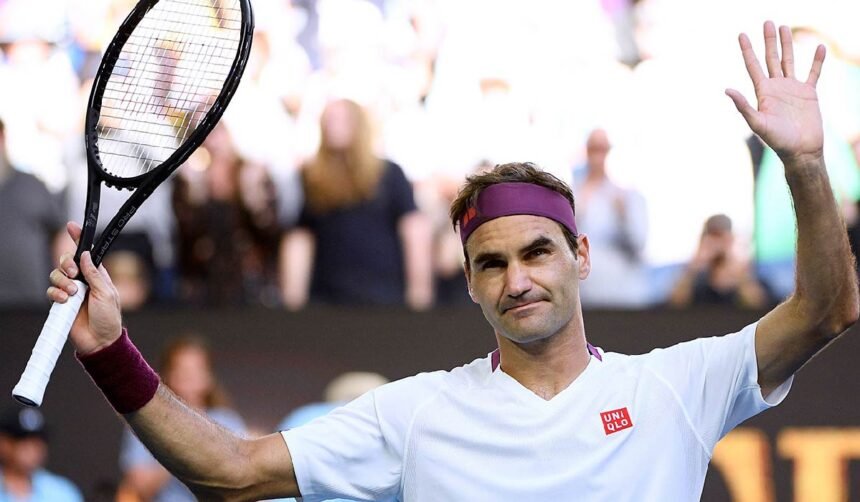
The end of Roger Federer’s professional tennis career did not arrive with panic or visible uncertainty. It arrived quietly, with a sense of completion that few elite athletes manage to reach. When the final match ended and the calendar cleared, the most striking change was not what Federer began doing, but what he no longer had to do. No early alarms tied to recovery sessions. No weeks mapped out by tournament draws. No constant evaluation of the body against the demands of another season.
For decades, Federer lived inside a structure that left little room for spontaneity. Every decision, from meals to travel routes, served a single objective. Retirement removed that framework overnight. What followed was not a rush to replace it, but a deliberate pause. Federer spoke openly about enjoying the absence of urgency. Days no longer needed to justify themselves through productivity. That shift, subtle on the surface, marked the most significant transition of his post tennis life.
Instead of filling the silence with new commitments, Federer allowed it to exist. He resisted the familiar pattern of retired champions who immediately seek relevance through commentary, coaching, or constant public appearances. The absence of a fixed role became a choice rather than a void. This approach shaped everything that followed, from family life to travel, from sport to business.
Family as the new centre of gravity
Family life moved from the margins to the centre once Federer stepped away from competition. During his playing years, time with his wife Mirka and their four children was carefully protected but limited by travel and recovery demands. Retirement changed that balance entirely. Home became the default setting rather than a brief stop between tournaments.
Daily routines now resemble those of a present parent rather than a visiting one. School runs, shared meals, and unplanned afternoons replaced the rigid scheduling of tour life. Federer has spoken about rediscovering ordinary moments that once passed too quickly. These moments carry weight precisely because they lack spectacle. They represent time reclaimed rather than time filled.
Parenting after a career defined by global attention requires restraint. Federer and Mirka have chosen to keep their children largely out of the public eye. There is no attempt to turn them into extensions of a sporting legacy. Instead, the focus remains on normality. Discipline still matters, but it no longer carries the pressure of comparison or expectation. Sport exists as an option, not a mandate.
The family dynamic also benefits from Federer’s emotional availability. Without the mental load of upcoming matches or lingering injuries, he engages more fully in conversations and decisions. This presence, built slowly over time, reflects a conscious effort to separate identity from achievement. Tennis shaped his life, but it no longer defines his role within his own household.
Travel without tournaments or deadlines
Travel once defined Federer’s professional existence. Airports, hotels, and stadiums blurred into a repeating pattern dictated by the tour calendar. Retirement transformed travel from obligation into choice. The difference lies not in destinations, but in pace and intention.
Federer now revisits cities he once knew only through practice courts and press rooms. Staying longer than a few days allows him to experience places beyond their sporting infrastructure. Meals are not timed around matches. Walks replace transport shuttles. Museums and neighbourhoods receive attention that once belonged exclusively to recovery routines.
Switzerland remains his base, but it no longer functions as a recovery hub between trips. It serves as a home in the truest sense. From there, travel extends outward without the pressure to return quickly. Africa holds particular significance through his foundation work, while Europe and the United States remain familiar yet newly accessible on personal terms.
This slower form of travel reflects a broader shift in priorities. Movement now satisfies curiosity rather than preparation. The absence of deadlines allows Federer to stay present rather than constantly anticipating the next obligation. In this context, travel becomes restorative rather than draining, a reversal of its former role.
Staying athletic without competing
Federer’s relationship with physical activity did not end with retirement. It changed in character. Sport now exists without rankings, points, or the constant assessment of performance. Tennis remains part of his life, but it no longer dominates it.
Casual matches replace structured training blocks. Hitting a few balls becomes an act of enjoyment rather than rehearsal. Exhibition events and charity matches offer opportunities to play without the mental strain of competition. These appearances are selective, chosen for meaning rather than frequency.
Beyond tennis, Federer maintains an active lifestyle focused on longevity. Hiking, skiing, and general fitness support mobility rather than peak performance. Training sessions adapt to how the body feels rather than what the calendar demands. This approach acknowledges the cumulative impact of decades at the highest level.
Avoiding the legends circuit reflects this philosophy. While such tours offer visibility and income, they also recreate the grind of constant travel and physical strain. Federer’s decision to step back signals an understanding of limits. Athleticism remains part of his identity, but it no longer dictates his schedule or self worth.
Business involvement on his own terms
Federer’s post retirement business life reflects the same restraint that defines his personal choices. Endorsements did not disappear, but they evolved. Long standing partnerships with brands such as Uniqlo and Rolex continue, grounded in mutual respect rather than transactional appearances.
The most notable shift lies in equity based involvement. Federer’s role with On Running illustrates this change. Rather than serving as a promotional figure, he participates in product development and strategic direction. This level of engagement aligns with long term thinking rather than short term exposure.
Choosing fewer projects allows for deeper involvement. Federer avoids oversaturation by limiting public facing campaigns. Each association carries weight because it remains selective. This approach protects credibility while allowing room for genuine contribution.
Business decisions also reflect personal values. Comfort, quality, and sustainability matter more than expansion for its own sake. Federer’s reputation allows him to say no, and he exercises that option deliberately. The result is a portfolio that mirrors his post tennis life, controlled, intentional, and measured.
Philanthropy without performance
The Roger Federer Foundation has existed for years, but retirement altered Federer’s relationship with it. Time once divided between training and competition now allows for deeper engagement. Education projects in Africa remain the foundation’s core focus, approached with long term commitment rather than short bursts of attention.
Federer avoids grand gestures or constant publicity around this work. Involvement often happens quietly, away from cameras. The emphasis stays on outcomes rather than visibility. Schools built, teachers trained, and communities supported provide tangible measures of progress.
Retirement enables more hands on participation. Visits to project sites carry a different tone when they are not squeezed between tournaments. Conversations extend beyond formalities. Listening replaces presenting. This shift aligns with Federer’s broader move away from performance driven interaction.
Philanthropy also becomes a family matter. Introducing his children to these projects frames responsibility as part of everyday life rather than a separate activity. Giving back loses its ceremonial aspect and becomes integrated into how the family understands its place in the world.
Leisure, culture, and ordinary pleasures
Leisure takes on new meaning when it no longer competes with recovery schedules. Federer now engages with culture and hobbies at a relaxed pace. Reading, music, and film fill spaces once reserved for mental preparation. These activities do not serve a performance goal. They exist for enjoyment alone.
Social life expands beyond the narrow circle dictated by the tour. Friends outside tennis receive more attention. Shared dinners and informal gatherings replace carefully managed appearances. In these settings, Federer participates as a person rather than a public figure, comfortable in anonymity when possible.
Food also becomes a source of pleasure rather than fuel. Meals stretch longer. Choices broaden. Dining out loses its association with strict nutritional planning. Sitting comfortably in a restaurant, whether at home or abroad, carries a sense of freedom that once felt distant, even in familiar places with restaurant booths lining the walls.
This embrace of ordinary pleasures reflects a broader recalibration. Leisure no longer requires justification. It occupies space without apology, reinforcing the idea that value exists beyond productivity or achievement.
Public presence without constant visibility
Federer remains a public figure, but his visibility follows a different rhythm. Appearances now align with personal interest rather than obligation. He attends events selectively, often connected to causes or partnerships that matter to him.
Media interactions have also changed. Interviews focus less on analysis and more on reflection. Federer speaks openly about uncertainty, contentment, and the complexity of transition. He avoids definitive statements about future roles, resisting the pressure to define a next chapter.
This restraint preserves autonomy. By limiting exposure, Federer maintains control over his narrative. Public interest remains high, but it no longer dictates his schedule. Silence becomes a tool rather than a liability.
Identity beyond competition
One of the most significant aspects of Federer’s retirement lies in how he handles identity. For many athletes, the end of competition triggers a crisis rooted in loss of purpose. Federer’s approach suggests a different path. He acknowledges tennis as central to his life while allowing it to recede without resentment.
This balance stems from a long awareness of impermanence. Injuries and age forced gradual adaptation during his final years on tour. Retirement therefore arrived as an extension of an ongoing process rather than a sudden rupture.
Federer’s identity now draws from multiple sources. Family, curiosity, movement, and contribution share space with memory and legacy. None demands dominance. This distribution reduces pressure and supports stability.
Influence without instruction
Federer’s influence persists, but it does not rely on direct instruction. Young players study his matches. Fans reference his conduct. Yet he avoids positioning himself as a moral authority or technical guide.
This distance preserves authenticity. Advice carries more weight when it is not constantly offered. Federer’s example continues through recorded history and personal interaction rather than formal mentorship.
When he does engage with younger players, the tone remains conversational rather than directive. Experience becomes something to share, not impose. This approach mirrors his broader post retirement philosophy, presence without dominance.
The meaning of success revisited
Retirement invites reflection on what success means once external measures disappear. Federer’s life after tennis suggests a definition rooted in balance rather than accumulation. Time, attention, and choice replace trophies as markers of achievement.
This redefinition does not reject ambition. It reframes it. Goals still exist, but they align with personal values rather than public expectation. Progress becomes internal rather than comparative.
Such an approach resonates beyond sport. It offers a model for transition that prioritises continuity over reinvention. Federer did not become someone else. He allowed himself to become more fully who he already was.
Legacy as a living concept
Federer’s legacy continues to evolve precisely because it is not fixed. It exists in memory, influence, and ongoing presence. Retirement did not freeze it in time. It allowed it to breathe.
By stepping back, Federer created space for interpretation. Fans, players, and observers draw their own conclusions. This openness strengthens rather than weakens his place in cultural memory.
Legacy here functions as a living concept, shaped by behaviour rather than declarations. How Federer lives now informs how his career is remembered. The absence of spectacle reinforces the substance of what came before.
A life without urgency
Perhaps the most defining feature of Federer’s post tennis life is the absence of urgency. Decisions unfold without haste. Time stretches rather than compresses. This rhythm contrasts sharply with the intensity that defined his professional years.
Urgency once served a purpose. It drove preparation and focus. Without it, space opens for reflection and adjustment. Federer appears comfortable within this slower tempo, suggesting that mastery includes knowing when to stop pushing.
This comfort does not imply stagnation. Activity continues, but it follows curiosity rather than necessity. The result is a life that feels coherent rather than fragmented.
Closing perspective
Roger Federer’s life after tennis resists easy summary. It lacks dramatic reinvention or constant visibility. Instead, it unfolds through deliberate choices grounded in presence and restraint. Family anchors his days. Travel satisfies curiosity. Sport remains without dominance. Business reflects values. Philanthropy deepens quietly.
This approach challenges common narratives around retirement, especially for figures accustomed to global attention. Federer demonstrates that stepping away does not require disappearance or reinvention. It requires clarity.
In choosing how much to do rather than how much to add, Federer shapes a post career life defined not by absence, but by intention.