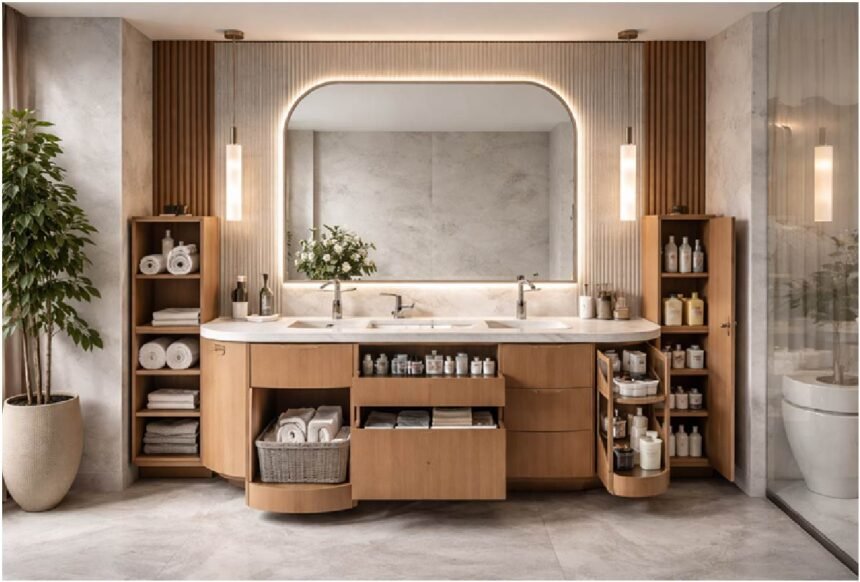
Bathrooms have quietly transformed from purely functional spaces into high-impact design statements. Today, whether it’s a residential renovation, a boutique hotel project, or a mixed-use commercial development, bathroom cabinet designs play a decisive role in balancing aesthetics, storage efficiency, and build feasibility.
For architects, engineers, business owners, and tech-led construction firms in the UK and globally, the challenge is clear:
How do you maximize storage without sacrificing style while still keeping designs practical, buildable, and CAD-ready?
This is where innovation in cabinetry, materials, and bathroom vanity CAD drawings is reshaping modern bathroom planning. Let’s explore 10 innovative bathroom cabinet designs that are defining current trends and how CAD design and drafting services are helping turn these ideas into precise, build-ready solutions.
Why Are Bathroom Cabinet Designs More Important Than Ever?
Bathrooms are often the smallest yet most technically complex rooms in any building. According to Houzz UK Bathroom Trends, over 60% of homeowners prioritize storage improvements during bathroom renovations, while commercial projects increasingly demand modularity and space optimization.
At the same time:
- Urban living spaces are shrinking
- Sustainability expectations are rising
- Construction timelines are tighter than ever
This makes intelligent cabinet design not just beautiful finishes a critical success factor.
1. Why Are Wall-Mounted Bathroom Cabinet Designs Dominating Modern Projects?
Wall-mounted bathroom cabinet designs are no longer just a minimalist preference, they’re a practical necessity.
What makes them innovative?
- Cabinets are lifted off the floor, creating visual openness
- Easier cleaning and better moisture control
- Adjustable mounting heights for accessibility compliance
From a CAD perspective, wall-mounted units require:
- Accurate load calculations
- Precise fixing details
- Coordination with plumbing and electrical layouts
Well-developed bathroom vanity CAD drawings ensure these cabinets are both visually elegant and structurally sound.
2. How Do Floating Vanity Cabinets Improve Storage Without Bulk?
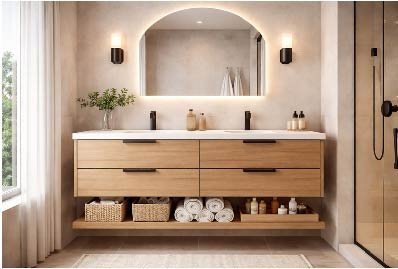
Floating vanity cabinets take wall-mounted concepts a step further by integrating concealed storage within sleek profiles.
Key design advantages:
- Deep drawers instead of traditional hinged doors
- Hidden compartments for electrical fittings
- Soft-close hardware integrated into CAD specifications
According to Statista’s global bathroom furniture market insights, floating vanities are among the fastest-growing cabinetry categories, especially in urban UK apartments and hospitality projects.
3. Can Full-Height Bathroom Cabinets Work in Small Spaces?
Absolutely when designed intelligently.
Full-height cabinets maximize vertical storage while maintaining a slim footprint. These designs work exceptionally well in:
- Narrow bathrooms
- Hotel ensuites
- High-density residential developments
CAD design considerations:
- Door swing analysis
- Ventilation clearances
- Material weight distribution
This is where professional bathroom interior design services paired with CAD drafting make the difference between a bulky cabinet and a refined storage tower.
4. Why Are Modular Bathroom Cabinet Systems Gaining Popularity?
Modular cabinetry is reshaping both residential and commercial bathroom design.
Why decision-makers love modular designs:
- Faster manufacturing and installation
- Easy replacement or expansion
- Cost predictability across multiple units or locations
From a drafting standpoint, modular cabinets rely on:
- Parametric CAD models
- Standardized dimensions
- Clear shop drawings for fabrication
This approach is particularly popular in UK build-to-rent and hotel chains, where consistency and scalability matter.
5. How Do Smart Storage Drawers Enhance Functionality?
Modern bathroom cabinets are doing more than holding toiletries.
Innovative drawer systems now include:
- Built-in organizers
- Hidden power outlets
- Sensor-activated lighting
These features require close coordination between:
- Cabinet designers
- Electrical engineers
- CAD drafting teams
Accurate bathroom vanity CAD drawings help eliminate on-site clashes and ensure seamless integration of technology.
6. Are Recessed Cabinets Still Relevant in Contemporary Design?
Recessed bathroom cabinets built into wall cavities are making a strong comeback.
Why?
- They save valuable floor space
- Offer a clean, flush finish
- Reduce visual clutter
However, recessed cabinets demand precise CAD coordination:
- Wall thickness validation
- Structural impact analysis
- Fire and moisture compliance checks
This design approach is increasingly seen in premium UK residential renovations and healthcare facilities.
7. How Are Dual-Purpose Cabinets Redefining Bathroom Storage?
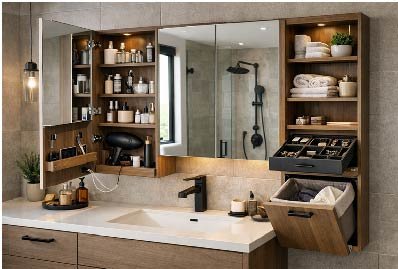
Dual-purpose cabinets combine multiple functions into a single unit.
Examples include:
- Mirror cabinets with hidden shelving
- Vanity units with integrated laundry hampers
- Storage benches with concealed compartments
These designs are especially effective in compact bathrooms, where every millimeter counts. CAD-driven detailing ensures these multifunctional units remain practical, not gimmicky.
8. Why Is Material Innovation Changing Bathroom Cabinet Design?
Today’s bathroom cabinets are no longer limited to MDF and laminates.
Trending materials include:
- Moisture-resistant plywood
- Recycled composites
- Anti-bacterial surface finishes
According to global construction material trend reports, sustainable and moisture-resistant materials are now a top priority for developers across the UK and Europe.
CAD material specifications help:
- Prevent costly material failures
- Ensure long-term durability
- Align designs with sustainability standards
9. Can Custom Bathroom Cabinets Still Be Cost-Effective?
Custom cabinetry isn’t just for luxury projects anymore.
Thanks to advanced CAD workflows:
- Custom designs can be optimized for manufacturing
- Material wastage is reduced
- Installation errors are minimized
This makes bespoke bathroom cabinet designs surprisingly cost-effective especially for projects with unique layouts or branding requirements.
10. How Do CAD-Driven Cabinet Designs Reduce Construction Risks?
This may be the most important innovation of all.
Modern bathroom cabinet design is no longer just about looks, it’s about buildability.
CAD and drafting benefits include:
- Clash detection with plumbing and MEP systems
- Accurate fabrication drawings
- Faster approvals and smoother installations
For architects, engineers, and tech-driven firms, CAD-ready cabinet designs significantly reduce rework, delays, and budget overruns.
Key Challenges in Modern Bathroom Cabinet Design (And How CAD Solves Them)
Despite all the innovation, challenges remain:
- Limited space in urban projects
- Moisture exposure and material failure
- Coordination across multiple trades
Advanced CAD drafting addresses these issues by:
- Providing millimeter-level precision
- Allowing early design validation
- Supporting seamless collaboration across teams
What Opportunities Do These Trends Create for UK and Global Projects?
For decision-makers, innovative bathroom cabinet designs unlock several opportunities:
- Higher property value
- Improved user experience
- Faster project delivery
- Stronger sustainability credentials
When paired with expert bathroom interior design services and detailed CAD drawings, these cabinet designs become strategic assets not just design features.
Final Thoughts:
Innovative bathroom cabinet designs are no longer optional; they’re essential. From wall-mounted solutions to smart storage systems, today’s cabinets must deliver on style, functionality, and constructability.
For UK and global projects, working with a leading UK CAD design company that understands bathroom ergonomics, materials, and fabrication standards can help translate creative concepts into flawless, build-ready outcomes without overcomplicating the process.
In the end, the best bathroom cabinet designs aren’t just seen.
They’re engineered to work beautifully for years to come.
FAQs
1. What are the most popular bathroom cabinet designs today?
The most popular bathroom cabinet designs today include wall-mounted cabinets, floating vanities, modular storage systems, and full-height cabinets. These designs focus on maximizing storage while maintaining a clean, modern aesthetic, especially in space-constrained UK and urban global homes.
2. Why are wall-mounted bathroom cabinet designs trending in the UK?
Wall-mounted bathroom cabinet designs are trending in the UK because they create a spacious, clutter-free look, improve floor accessibility, and support modern minimalist interiors. They also make cleaning easier and work well with contemporary plumbing layouts when planned using CAD drawings.
3. How do bathroom vanity CAD drawings improve cabinet design accuracy?
Bathroom vanity CAD drawings improve accuracy by defining exact dimensions, fixing points, material specifications, and service coordination. This reduces installation errors, prevents clashes with plumbing or electrical systems, and ensures cabinets are fabrication-ready before construction begins.
4. Are custom bathroom cabinet designs cost-effective for commercial projects?
Yes, custom bathroom cabinet designs can be cost-effective when developed using CAD-based workflows. Precise drafting minimizes material waste, speeds up installation, and reduces rework making custom cabinetry viable for hotels, offices, and large residential developments.
5. What storage solutions work best for small bathrooms?
For small bathrooms, floating vanities, recessed cabinets, mirror storage units, and vertical full-height cabinets work best. These designs use wall space efficiently and are commonly planned through professional bathroom interior design services to ensure optimal layout and usability.
6. How does CAD technology support modern bathroom interior design services?
CAD technology supports bathroom interior design services by enabling 3D visualization, precise space planning, and early clash detection. It allows architects and engineers to test cabinet layouts, materials, and mounting methods before execution, saving time and cost.
7. What materials are best for long-lasting bathroom cabinets?
Moisture-resistant plywood, high-pressure laminates, marine boards, and composite materials are best for long-lasting bathroom cabinets. CAD-based material specifications help ensure durability, sustainability compliance, and suitability for humid bathroom environments.